
Logging One Interaction for a Couple or a Household
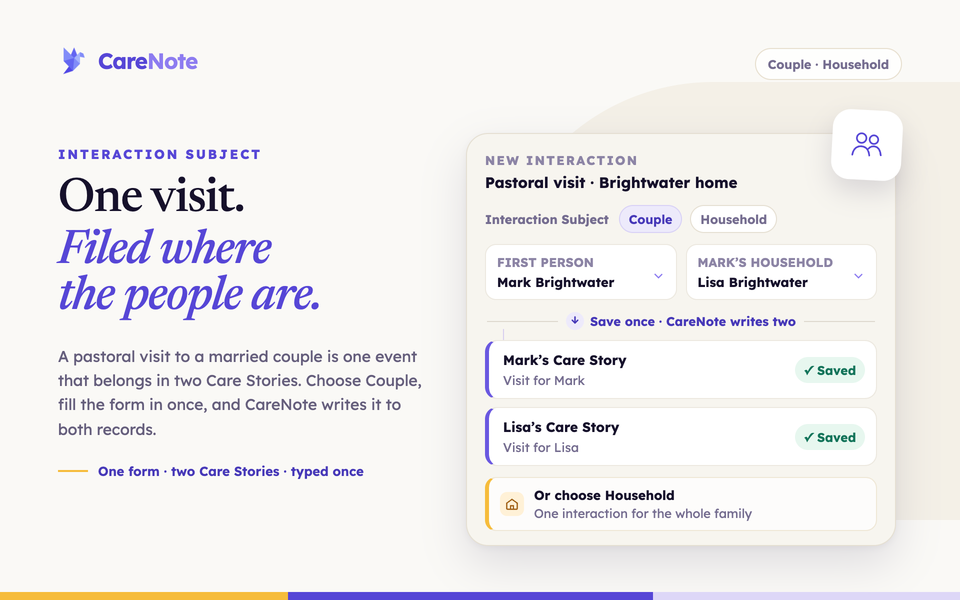
A hospital visit to a married couple is one event. So is a Sunday afternoon on a family's porch. CareNote now lets you record that one event for both people, or for the whole family, without filling the form in twice.
Logging one interaction for a couple, and one for a household, on the demo team
The Interaction Subject dropdown has two more choices: Couple and Household.
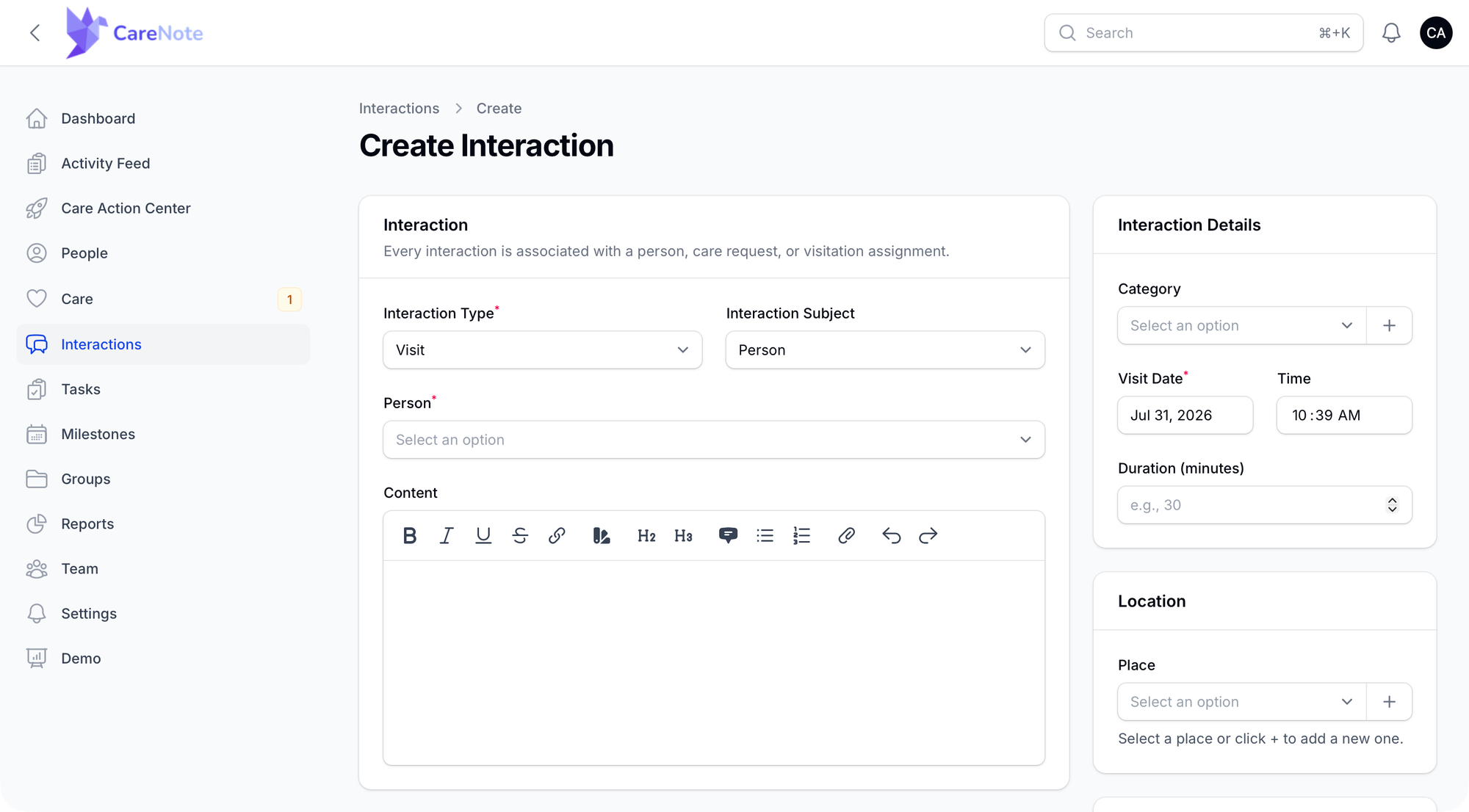
When to use Person, Couple, or Household
The subject you choose is the level the care gets recorded at, and the three are genuinely different records.
- Person creates one interaction in that person's Care Story. This is still the right choice most of the time.
- Couple creates an interaction in each person's Care Story. Two records, from one form.
- Household creates one interaction for the family as a whole, attached to the household rather than to anybody in it.
A good rule: if you would want this to show up when you later open her record, use Couple. If the care was genuinely for the family as a unit, like a meal drop-off or help with a move, use Household.
Important limits to consider
Two limits are worth knowing before you choose, because they are easier to avoid than to undo.
Couple interactions count twice in reports, because CareNote creates one interaction for each person. For example, a 60 minute couple visit appears as 120 minutes of care across reports, charts, and exports. If you track care hours closely, log the visit against one person and mention the spouse in the note.
A household interaction does not appear on any individual member's Care Story. It is filed against the family, so opening Sadie's record will not show it. If you need the visit to appear on a person's timeline, choose Person or Couple instead.
Logging an interaction for a couple
- Click Interactions in the left navigation, then New interaction.
- Choose your Interaction Type as usual.
- Set Interaction Subject to Couple. The person picker splits into two boxes.
- Pick the First person.
- Pick the Second person. The list first shows people from the first person's household, so after choosing Mark you are picking from Mark's family instead of searching the whole congregation.
- Fill in the rest of the form exactly as you normally would, then click Create.
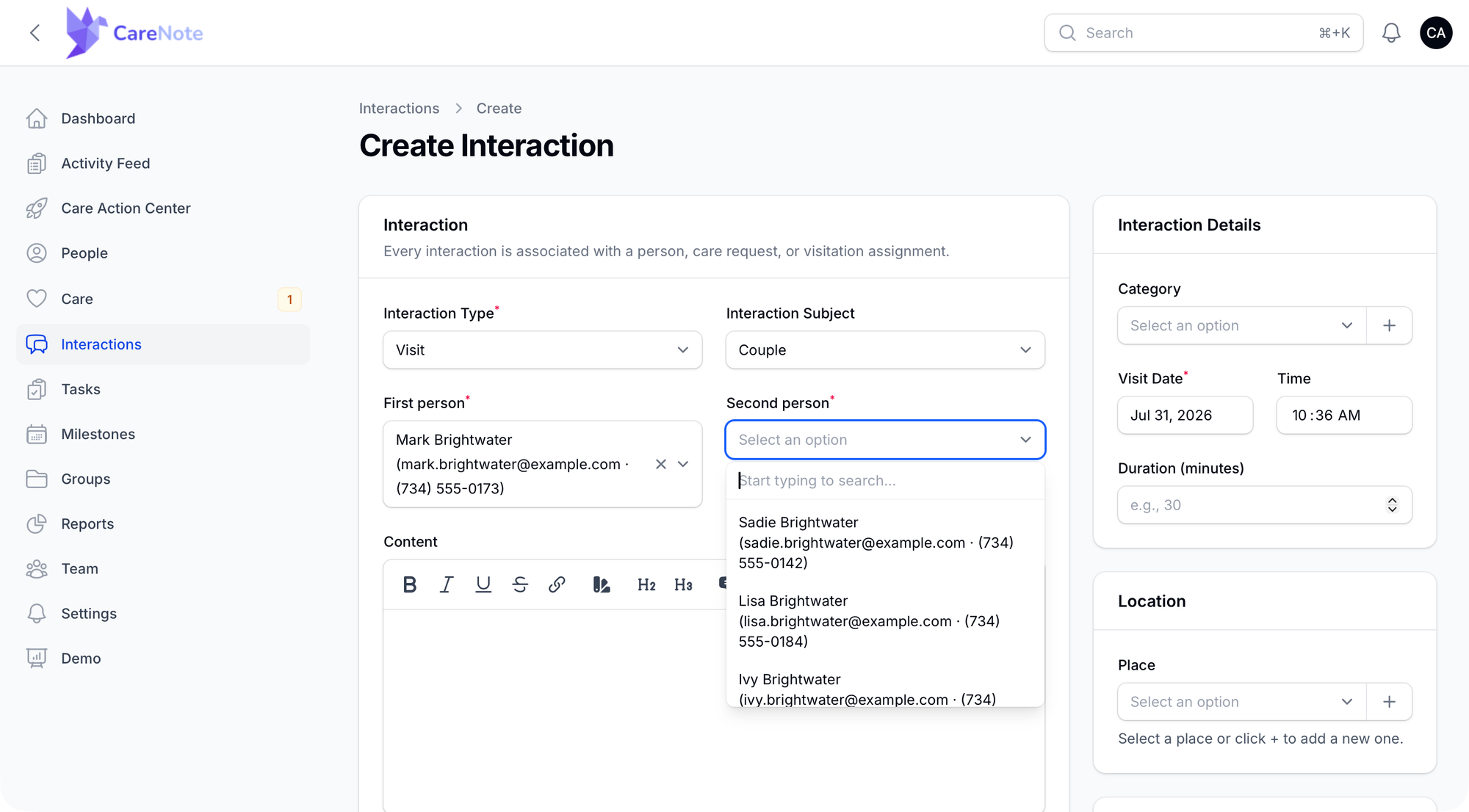
The shorter list is a convenience, not a restriction. If the two people are not listed in the same household in CareNote, just type a name and the search reaches everyone. The helper text under the box tells you which of the two situations you are in.
When you save, CareNote creates two interactions, one for each person, each appearing in that person's own Care Story. The second one gets its own title, so her record does not read "Visit for Mark". Privacy travels with it: if you restricted the interaction to a role or a group, the second copy carries exactly the same restrictions.
CareNote handles two details separately for each person rather than copying them across:
- Follow-up tasks. Each person gets their own task, named for them.
- Visitation schedules. The visit is recorded on each person's own schedule.
Logging an interaction for a household
- Set Interaction Subject to Household.
- In the Household box, search for anyone in the family.
- Choose the household from the results, complete the form, and click Create.
You can search by any person in the household, even if you do not know the household name. You almost never think of a family by its household record. You think of Sadie.
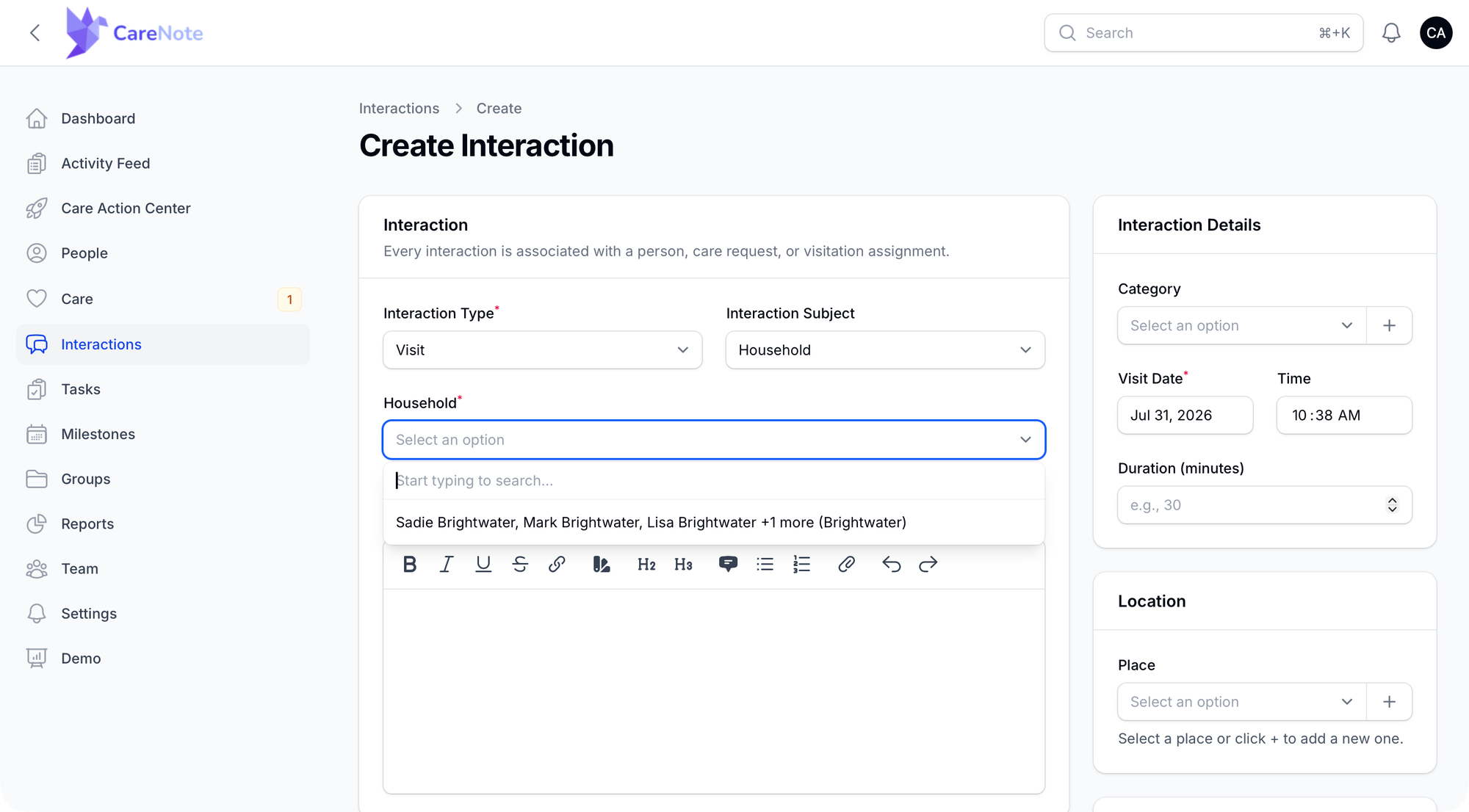
Before you type anything, each household is listed by the people in it, with the family name in parentheses. Families larger than three people show how many more are in the household rather than silently cutting the list short.
Type a person's name and the matching household comes back named after that person.
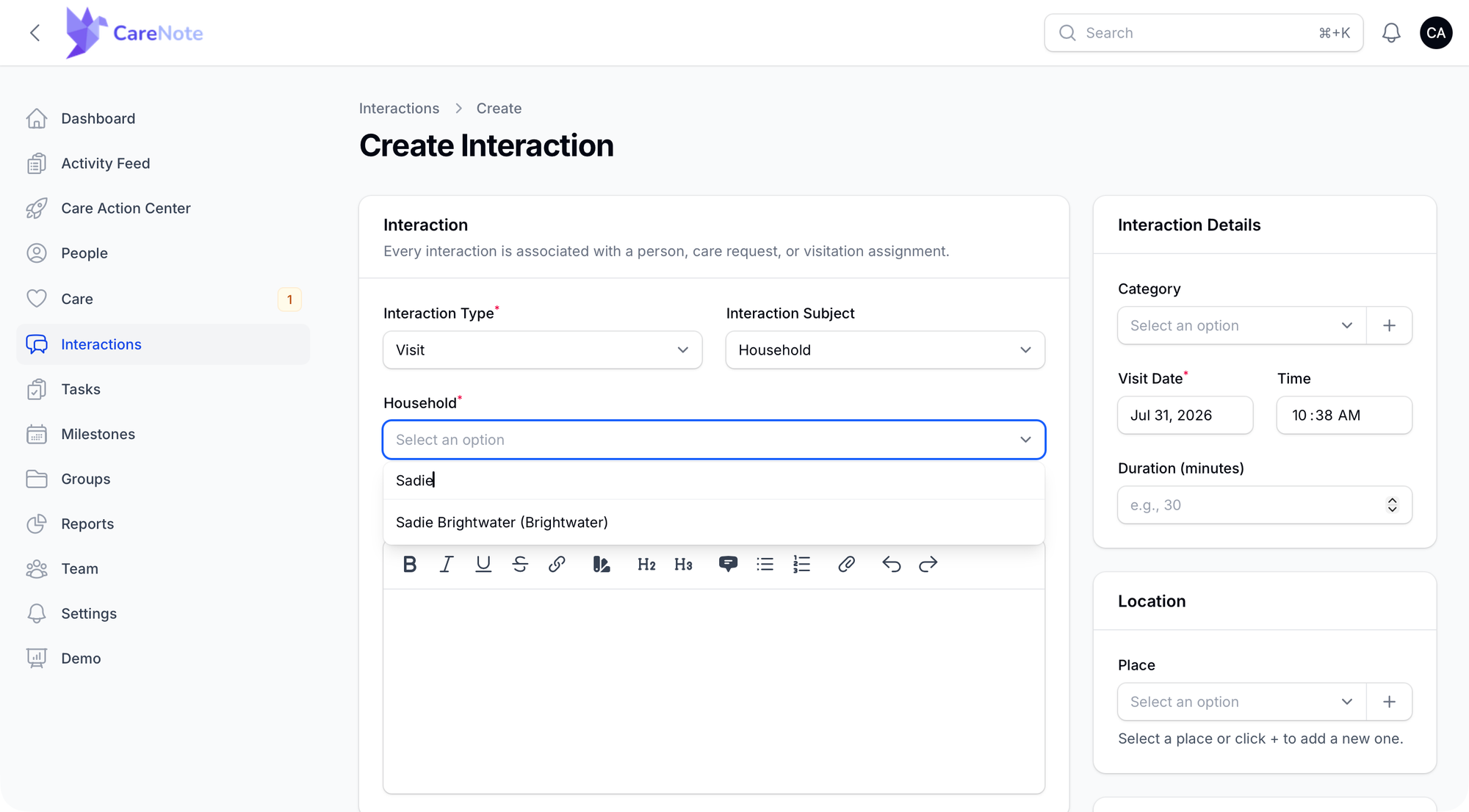
Full names work too. Typing "Sadie Brightwater" finds her just as reliably as typing "Sadie", and so does the family name if your team names households.
Your choice stays person-led after you make it, so the box still shows the person you searched for rather than swapping itself back to the family name.
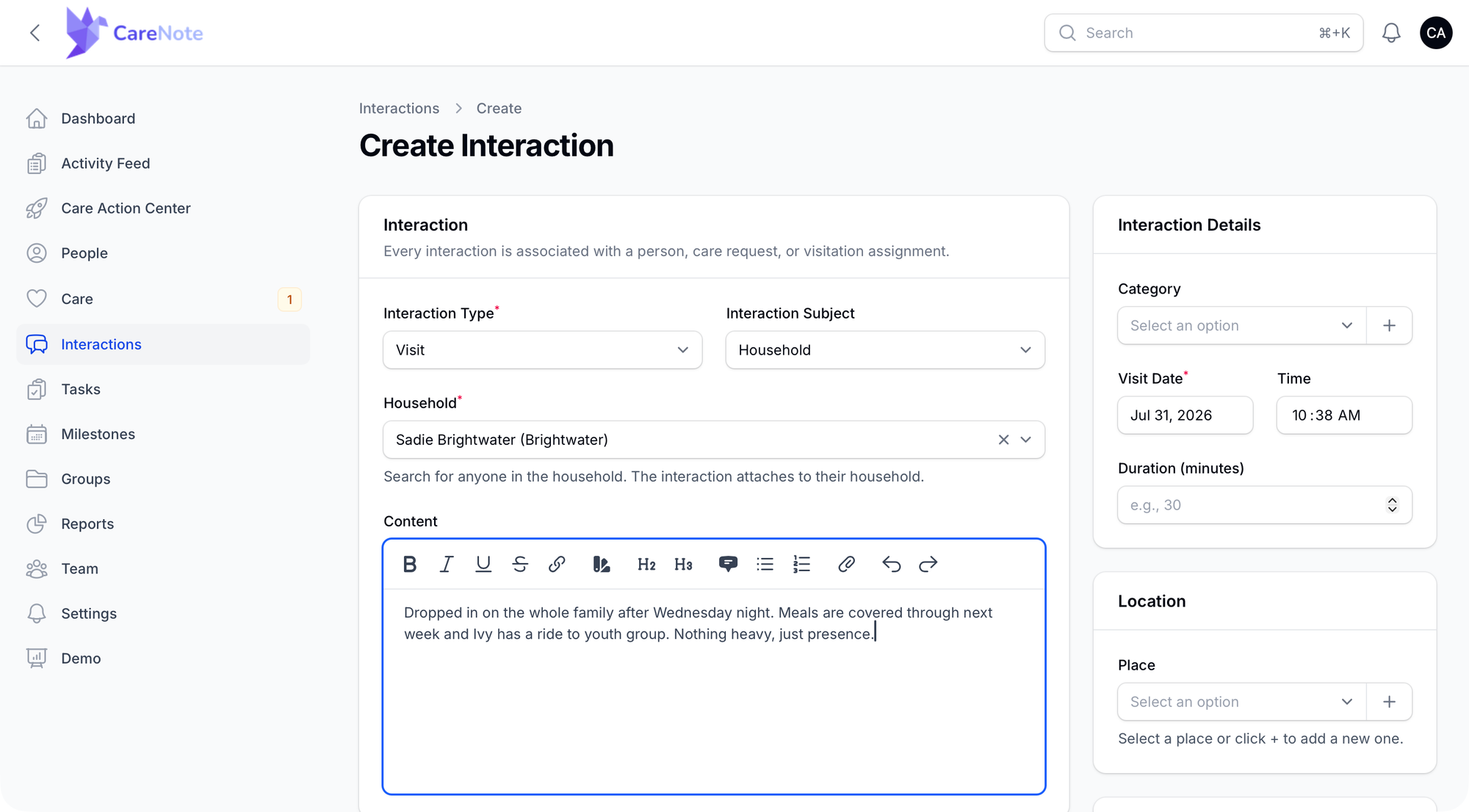
Whichever member you searched for, the interaction attaches to the household. Sadie is how you found the family, not what the record is filed against.
What you end up with
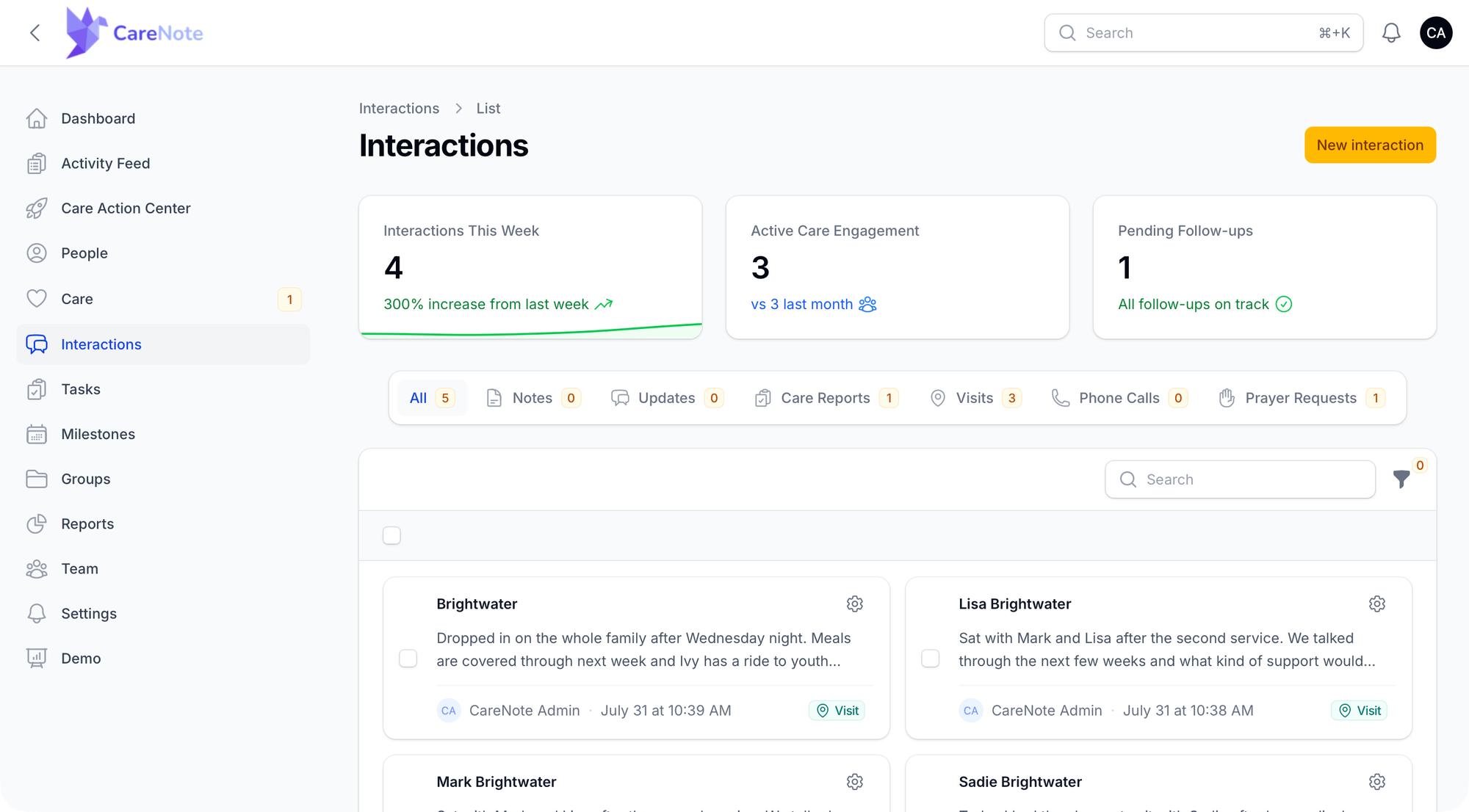
One trip to the form produced a household visit filed against the Brightwater family, and one couple visit filed twice, once for Mark and once for Lisa, each carrying the same note.
Where to find these interactions afterwards
Couple interactions appear in each person's Care Story, exactly like any other interaction logged against a person.
Household interactions appear in two places. Open the household from People, then choose its Interactions tab to see everything logged against that family. They also appear in the main Interactions list alongside everything else, where the subject column shows the family name.
Frequently asked questions
Can I edit a couple interaction afterwards and change both at once? No. Two interactions are two records. Opening either one shows it as an ordinary Person interaction and edits only that one. If the content needs to change on both, edit each.
Will a couple visit double my reported care time? Yes. CareNote creates one interaction per person, so a 60 minute couple visit reports as 120 minutes. Log against one person if that matters for your reporting.
What if the person I want has no household on file? They will not appear in the Household picker, because there is nothing for the interaction to attach to. Add them to a household first, or log the interaction against them as a Person.
Does the second person have to be in the first person's household? No. The list starts with that household for convenience, but searching reaches everyone.
Will my team be notified twice for a couple? Each interaction follows your team's normal notification settings. Team members who follow both people may receive two notifications.
Can I log a couple from the volunteer dashboard as well as the admin panel? Yes. Both create forms behave the same way.